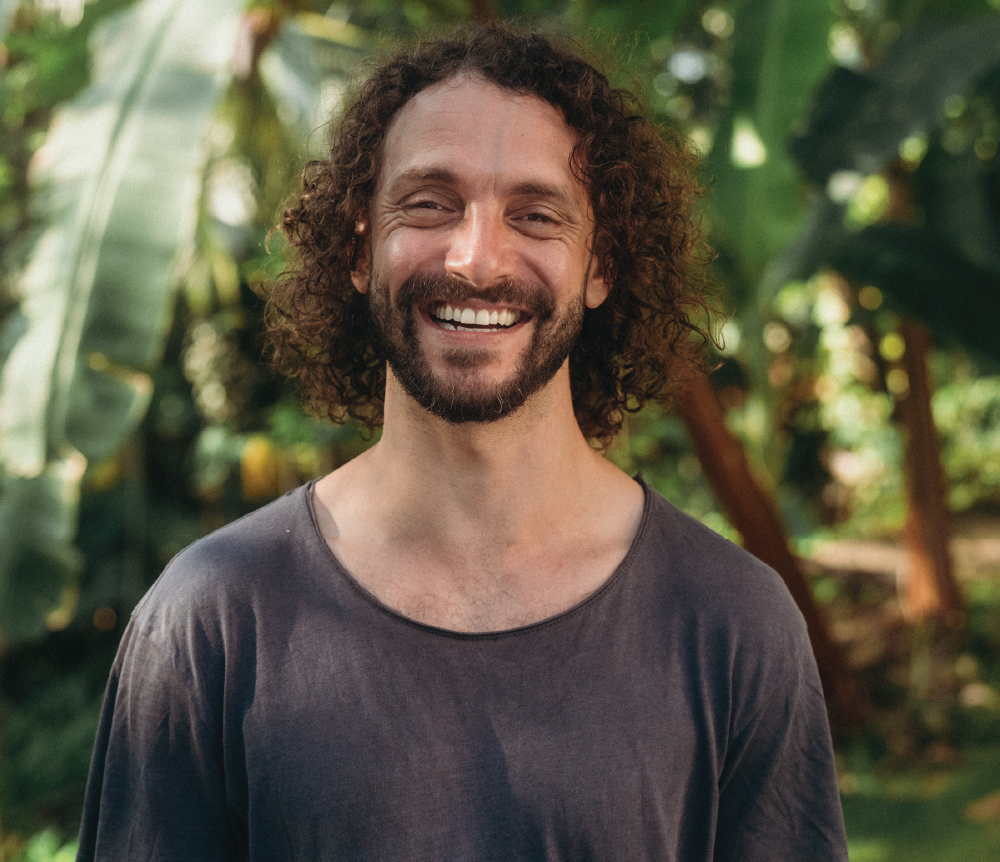
I felt like I'd found a whole new world. After about six months of practice I signed up for my first teacher training at a cool vinyasa studio, which was a complete revelation.
From there it was gym yoga B power vinyasa with loud music B Hatha B core strength vinyasa (Sadie Nardini) 8 lyengar for many years B finally Simon's Yoga Synergy.
I started teaching even before I finished my first teacher training. Back then — about 10 or 11 years ago in Melbourne — there was a real shortage of confident young male teachers, so it was easy for me to find work. I'd already been teaching and communicating ideas since I was 17, as a music teacher, so it felt natural. I was also very passionate about it.
First Trainings and Big Risks
There are two sides to the yoga business I run. The first is retreats and teacher trainings. I tried both as early as 2016. At first, the risk felt terrifying — paying deposits for venues, buying props, covering flights — because even for a small training back in 2016-17, I'd be five or ten thousand dollars in the red before starting. I just had to hope I could sell enough places and that people would show up and pay.
It took me three trainings to find success. The first one broke even, covering my living expenses for a while. The second was a tiny bit better. The third training had about 17 people, and I finally made a good profit. The students were happy, the teachers I worked with were happy, and everything clicked. Since then (besides COVID and a few setbacks where I lost my marketing edge), I've managed to fill almost all of my trainings.
As trainings grew, so did the risks. I remember in 2018-19, just before starting Lanka Yoga, putting down a $10,000 deposit, covering teachers’ flights, and then something like a volcano erupting in Bali making everything stressful and uncertain.
Owning the Space
The second side of the business is running my own venue. With that, I no longer pay deposits to someone else, but the risk shifts into covering overheads and keeping the place booked. I decided to open my own place after years of renting spaces and constantly having to move. Some venues even took the idea of teacher trainings and started running their own. I couldn't find consistency or grounding, so I decided to create it myself.
That was a huge investment and a huge risk — and it happened right at the start of COVID. Suddenly, all my money was tied up in a new project, and I had no idea if it would survive. If COVID had dragged on much longer, I would have had to borrow money or give up. Luckily, once restrictions eased, it turned into a good decision.
Growth from the Ground Up
For teacher trainings, growth came from figuring out online marketing. At first I thought I could fill trainings with my past students, and while a few did come, I realised quickly that the majority of students come through search. If you want to sell a training in Bali, you need to be found by people searching “yoga teacher training Bali.” The right keywords and algorithms are what bring people in.
So growth meant improving marketing, improving the courses themselves, hiring teachers, finding better venues, and eventually creating my own venue.
Hiring teachers was a challenge. At first I wanted the most qualified people I could find, but over time I realised it worked better to build a team of teachers who had studied with me, who I could train and guide. That made the experience more consistent and reliable, instead of dealing with the clashes that can happen when multiple highly experienced teachers come together.
For Lanka Yoga, at first it was just a space for my own trainings and retreats. But then we had all these gaps in between. We tried everything — running classes, hosting hotel guests, running lots of our own retreats, and hiring out the venue. What worked best was focusing on our own trainings, a few of our own retreats, and then venue hire. Venue hire is simpler: one group books the whole place for 1-3 weeks. Compare that to trying to fill retreats — to fill one week you'd need to sell 20 spots, which is like 80 spots a month. That's not sustainable.
So the model we landed on works: trainings, a few retreats, and venue hire. We rely on a mix of passive and active marketing, but always with an awareness that everything is online now and the full online presence matters.
Lessons I've Learned
You have to keep evolving. Even when everything is working perfectly, at some point you'll have to figure it out again — usually with marketing.
For a long time we had waitlists of 20-30 people, so I stopped worrying about marketing. I focused instead on course content, training teachers, creating a new manual, improving the food and the venue. Then suddenly bookings slowed. Competition had appeared, doing what we did but better.
I had to shift my focus from improving the experience (which was already great) to improving marketing — making sure we showed the experience for what it really was. And because the world changes so quickly — Al, social media, new platforms — you have to adapt constantly. Sometimes you figure it out and it works for two weeks, then your competition catches on and you're back to square one. That's the cycle.
That's the biggest lesson I've learned.
My Message to Founders
Be humble. Be real. Your shit does stink sometimes. Yoga teachers often talk like we're always right — in business and in what we teach. But we need to wake up and realise people see through false claims. Yoga doesn't “fix everything.” Alternate nostril breathing won't relax everyone — for some it causes panic attacks. Some cues are outdated or even counterproductive.
That's why many people move towards Pilates, CrossFit, and other practices. Our biggest problem in yoga is that we oversell it. We need to moderate our language, be accurate, more scientific, less all-encompassing. Yoga has incredible potential — but only if we sell it for what it is, not what we wish it was.
Business Takeaways from Build Before It's Perfect
Sometimes you're 10k in debt before the first student signs up. You just hope they show up and pay.
Control Your Ground
Renting made things unstable. Owning a venue gave grounding and consistency.
Train Your Team
It works better to build a team of teachers who studied with you than hire high-profile teachers with clashing styles.
Search Beats Social
80% of training bookings come from search engines. Social media still matters — but it's secondary.
Adapt or Fade
Even a full waitlist doesn't guarantee tomorrow. Marketing evolves fast. Stay curious and ready to shift.
At , we don't just share inspiring stories — we break down what makes yoga businesses succeed. By learning directly from real founders and entrepreneurs, we extract actionable lessons and proven strategies you can apply, so you can avoid common mistakes, feel more confident, grow faster, and make bold choices with clarity.
Business Takeaways
- How did you start your yoga business? First steps, investments, risks, and early decisions There are two sides to the yoga business I run. The first is retreats and teacher trainings. I tried both as early as 2016. At first, the risk felt terrifying — paying deposits for venues, buying props, covering flights — because even for a small training back in 2016–17, I’d be five or ten thousand dollars in the red before starting. I just had to hope I could sell enough places and that people would show up and pay.
- How did you grow your yoga business For teacher trainings, growth came from figuring out online marketing. At first I thought I could fill trainings with my past students, and while a few did come, I realised quickly that the majority of students come through search. If you want to sell a training in Bali, you need to be found by people searching “yoga teacher training Bali.” The right keywords and algorithms are what bring people in.
- What have you learned as a person and business owner You have to keep evolving. Even when everything is working perfectly, at some point you’ll have to figure it out again — usually with marketing.

